My Approach
My practice is grounded in a strengths-based, trauma-informed, and client-centered approach. I recognize that our thoughts, feelings, and relationships are shaped not only by our individual experiences, but also by the systems and environments around us. I believe personal growth can come through self-awareness, acceptance, and a genuine therapeutic relationship. Together, we’ll explore what you’re experiencing, find ways to navigate what feels difficult, and build on your strengths.
Creating a sense of safety is an important part of our work. I also pay attention to what is happening in the here and now—what you notice, feel, and experience in the moment—as this can offer meaningful insight into your larger experiences and relationships. Our work will be collaborative and guided by your needs, with space to slow down, get curious, and explore at a pace that feels right for you.
Art Therapy
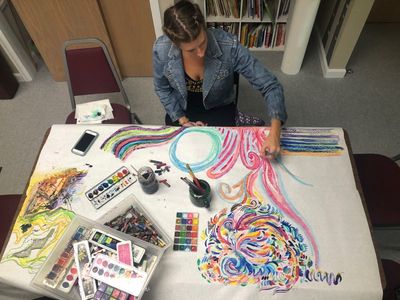
One way I bring this approach into our work is through art therapy, which I offer alongside talk therapy. Art can provide another way to connect with and express experiences and emotions that may be difficult to put into words. Making art in session allows our inner experiences to become visible and helps make big or difficult feelings easier to approach and work through. Art therapy also invites symbolism, self-expression, and curiosity, while honoring whatever you’re feeling.
Art therapy is for everyone. You don't need to consider yourself an artist or have any particular artistic skill to benefit from art therapy. The focus is not on creating something “good” or producing finished artwork, but on what emerges through the creative process. We pay attention to both your process of creating and the artwork itself as starting points for reflection and discussion. Whether we use conversation, creative expression, or a combination of both, our work will be guided by your goals, needs, and comfort level.
EMDR
EMDR (Eye Movement Desensitization and Reprocessing) is a trauma-focused approach that can help reprocess distressing experiences that have a lasting impact. EMDR uses bilateral stimulation, such as guided eye movements or tapping, while you connect with aspects of an experience in a safe and supported way. If you’re curious about whether EMDR might be right for you, we can explore it together.
What you can Expect from Me
Our first session is an opportunity to get to know one another, discuss what brings you to therapy, and begin identifying your goals and strengths. Together, we'll create a plan that fits your needs and supports your growth. My hope is that you'll leave feeling understood, empowered, and confident in the direction of your therapeutic process.